Electronics Engineering Laboratory
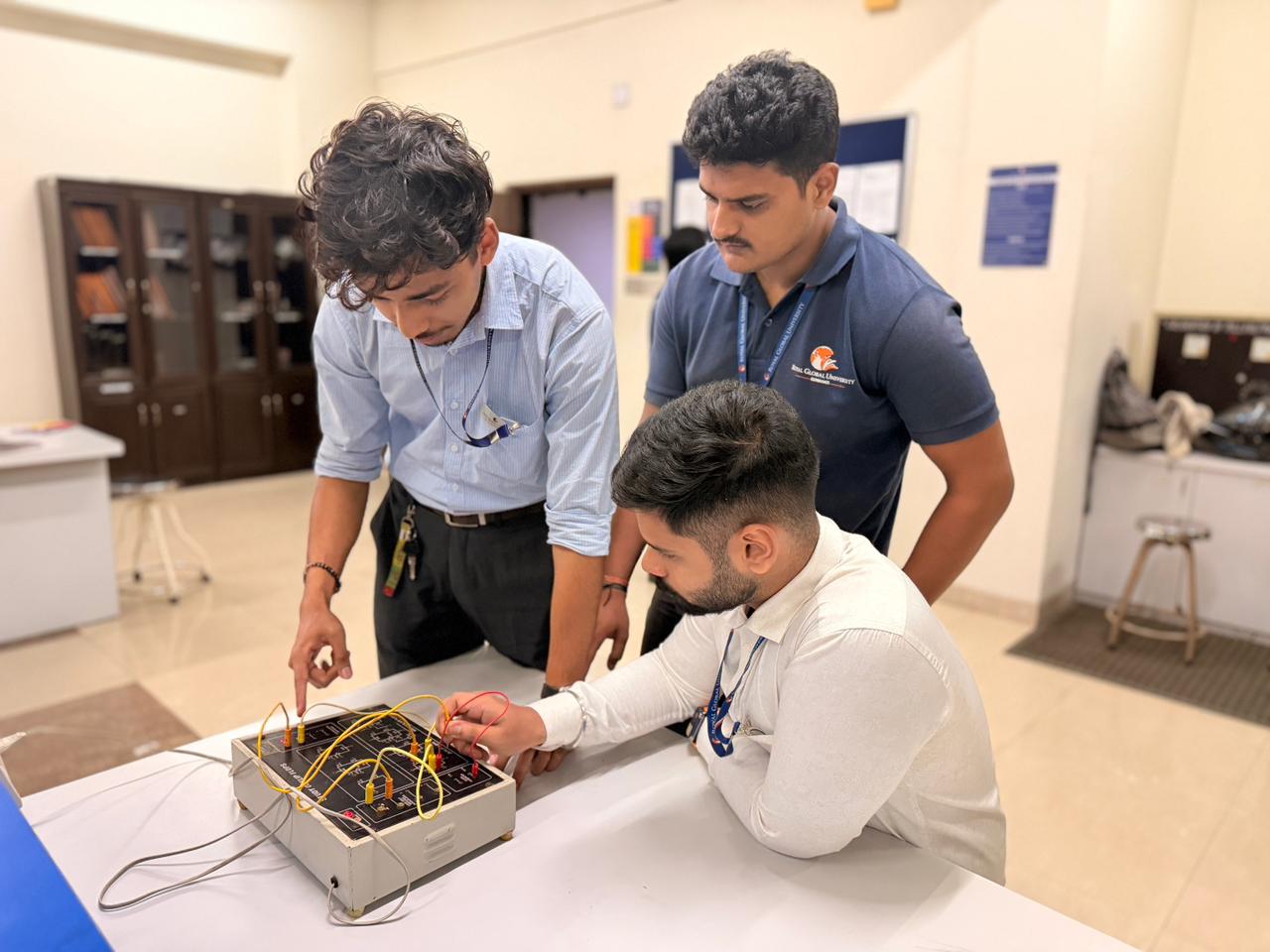
The Electronics Engineering Laboratory is a practical learning facility designed to provide students with hands-on experience in the field of electronics and embedded systems. It serves as an essential platform where theoretical concepts are transformed into practical applications through experiments and circuit design. The laboratory plays a vital role in enhancing students’ technical competence, innovation skills, and problem-solving abilities.
In this laboratory, practical classes are conducted for subjects such as Digital Electronics,
Microprocessor, Microcontroller and Basic Electronics. Students perform experiments
related to logic gates, Boolean algebra, combinational circuits, sequential circuits, flipflops,
counters,
registers, multiplexers, encoders, decoders, and memory devices. In
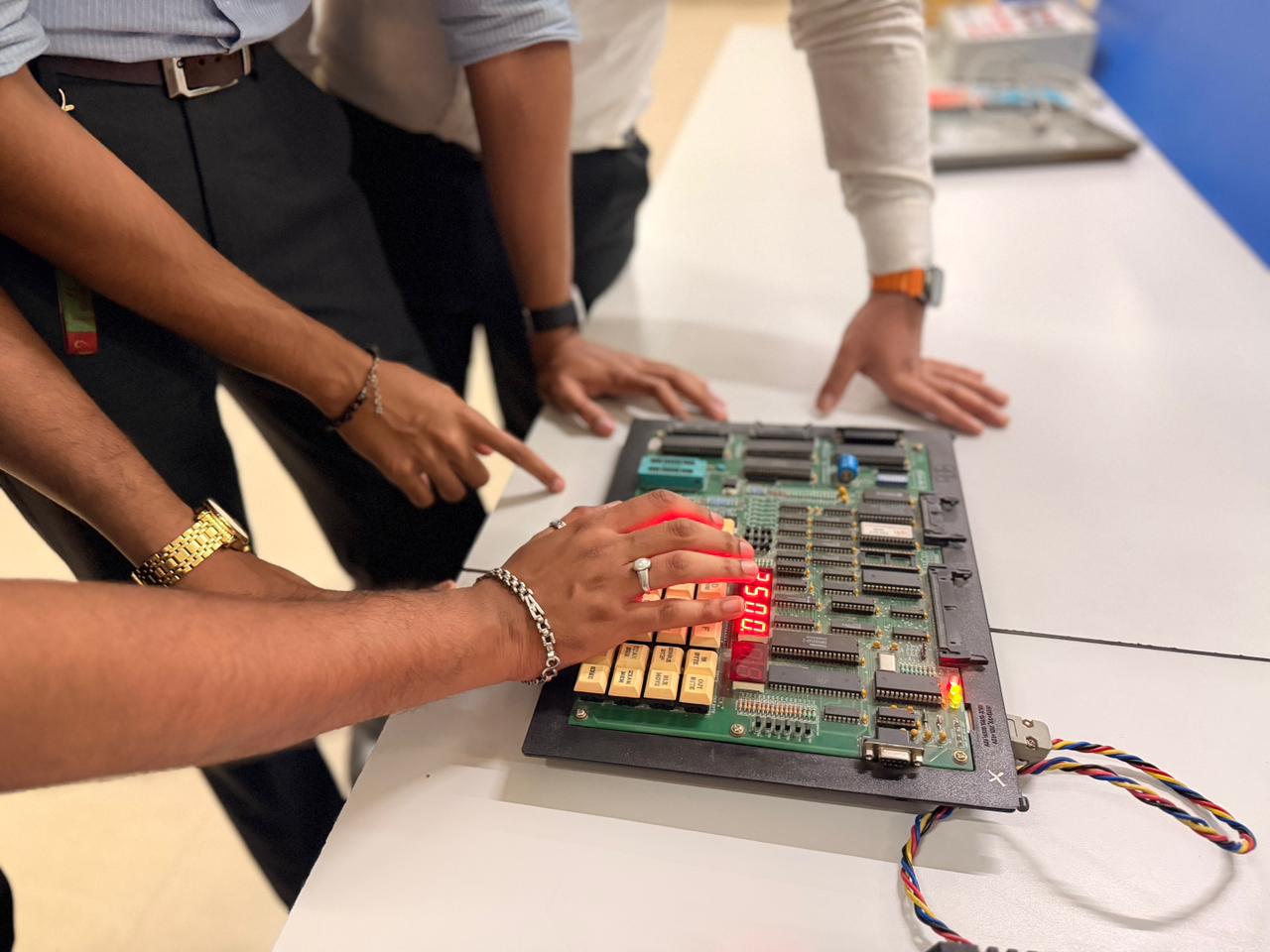
Microprocessor practical sessions, students learn assembly language programming,
interfacing techniques, timing operations, data transfer, arithmetic and logical operations,
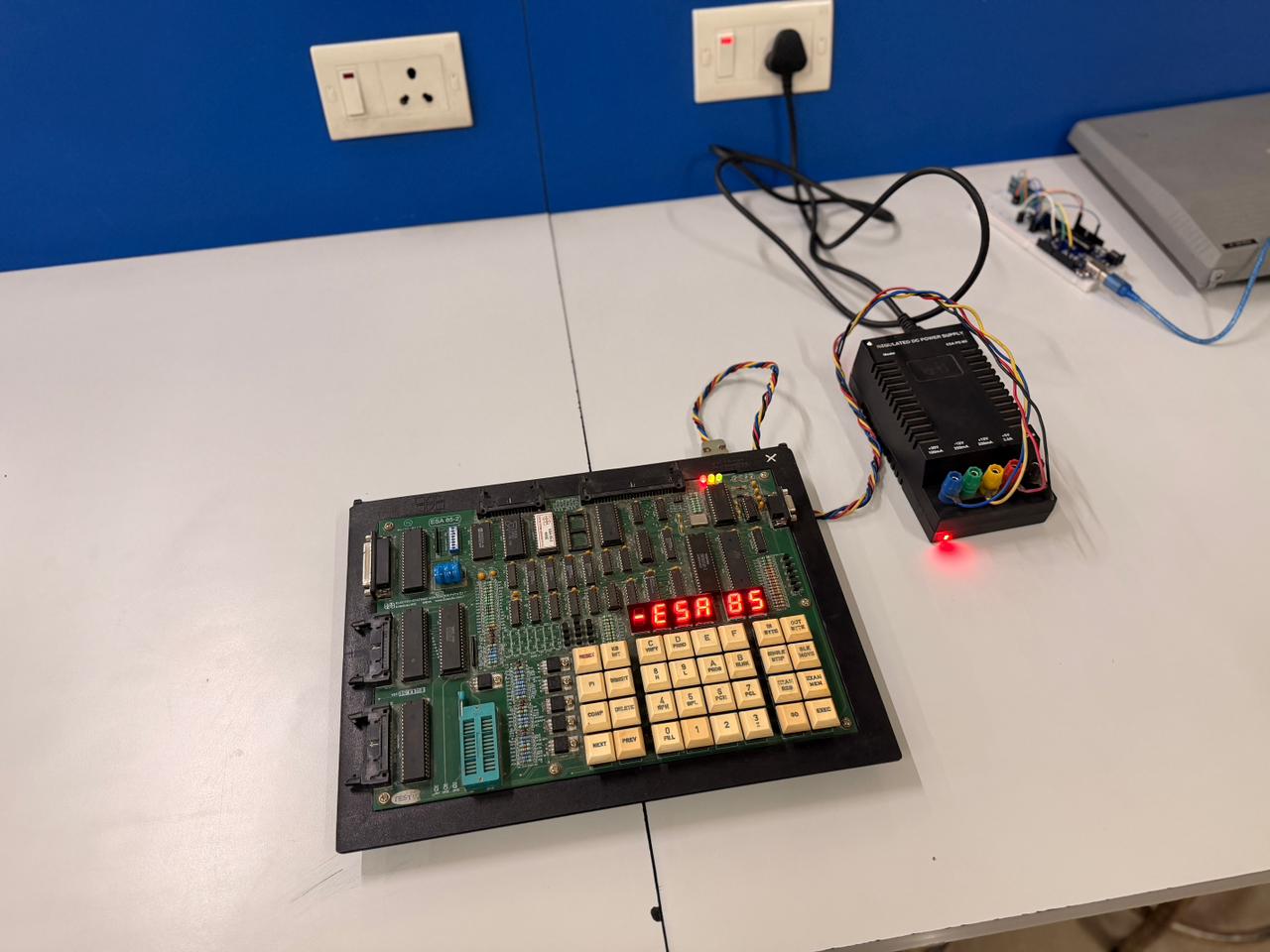
and hardware applications using 8086 Microprocessor Trainer Kit and other trainer
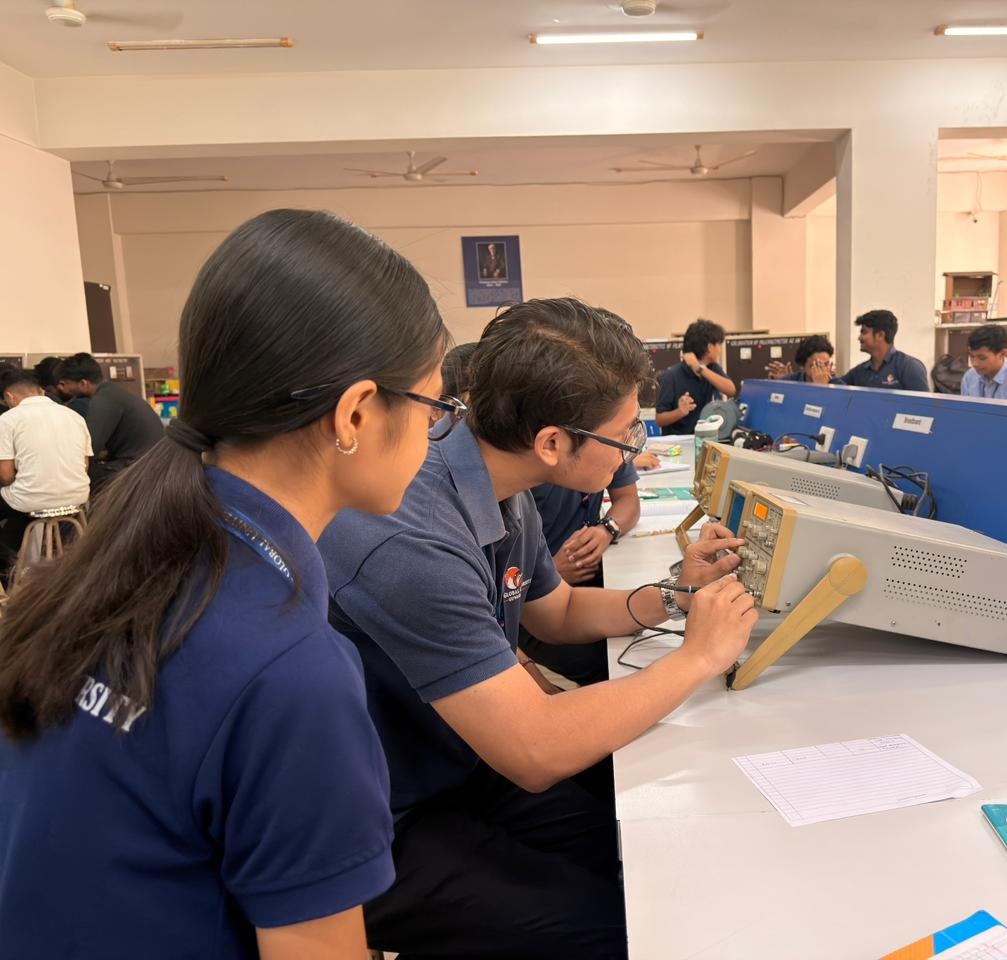
kits.The laboratory is well-equipped with modern instruments and equipment such as
Digital Storage Oscilloscope, function generators, regulated DC power supplies,
multimeters, breadboards, soldering stations, trainer kits and logic probe kits.
This laboratory encourages project-based learning, where students develop mini-projects
and prototypes related to automation, IoT, robotics, communication systems, and control
applications. It supports innovation and research activities by enabling students to
implement real-world solutions using electronic hardware and software tools. Overall, the
Electronics Engineering Laboratory bridges the gap between classroom theory and
industrial practice. It helps students develop practical skills, analytical thinking, teamwork,
and confidence, which are essential for higher studies, research, entrepreneurship, and
careers in electronics, electrical engineering, and allied industries.