
38th BCI National All India Inter University Moot Court Competition begins at RGU
GUWAHATI, January 30, 2026: The 38th Bar Council of India National All India
Moot Court Competition begins today at The Assam Royal Global University (RGU) with much enthusiasm as 64
teams from across the country are here to compete for this most prestigious legal event. The two-day-long
competition is being organised under the aegis of the Bar Council of India and the Bar Council of India
Trust-Pearl First.
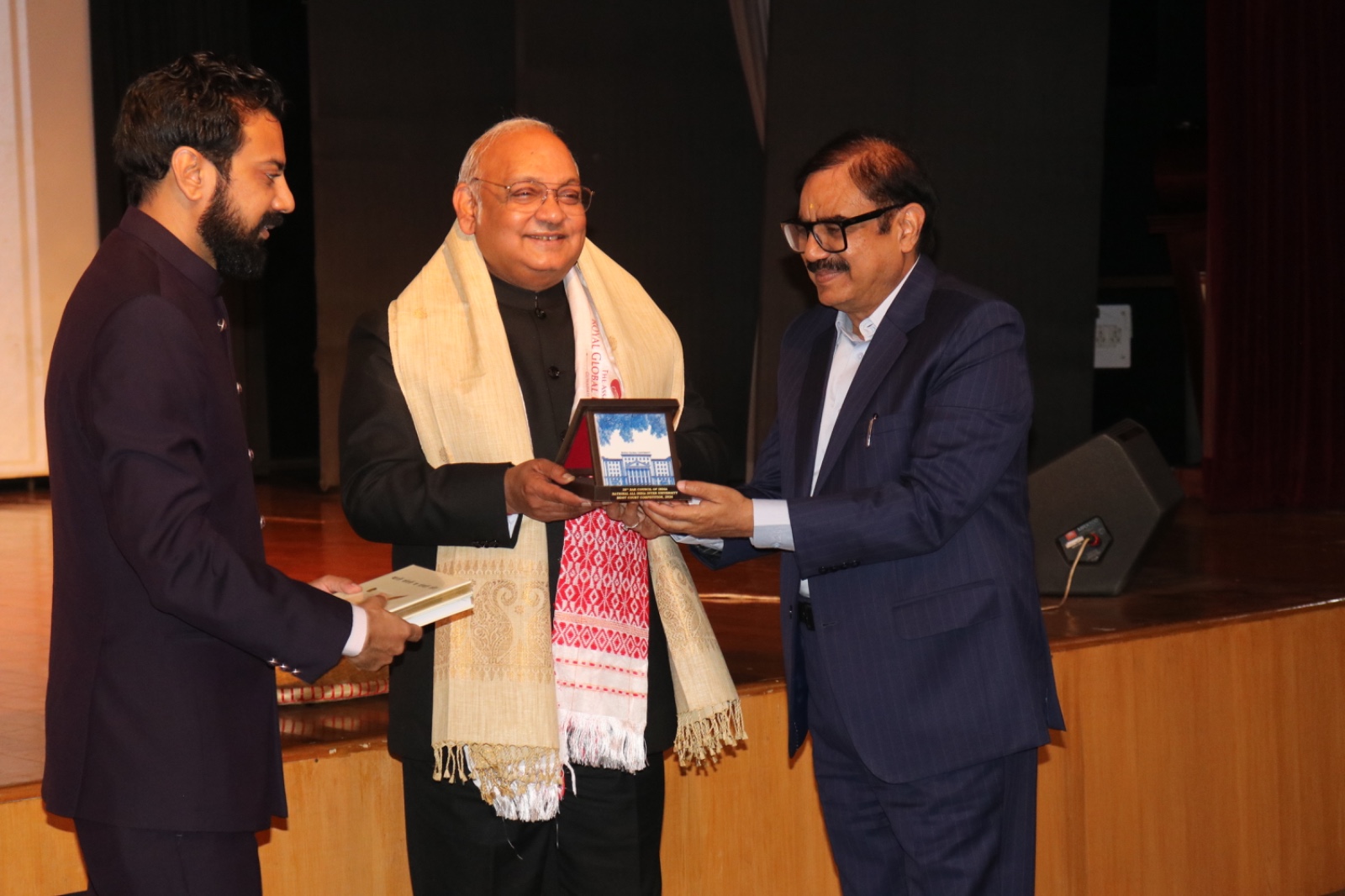
The inaugural session was graced by Dr. A. K. Pansari, Chancellor of RGU, Prof. A K Buragohain, Vice
Chancellor, Chief Guest Hon’ble Mr Justice Dinesh Maheshwari, former Judge of Supreme Court of India &
Chairperson, Law Commission of India; Guest of Honour Mr. Apurba Kumar Sharma, Senior Advocate and Executive
Chairman of the Bar Council of India; N. Manoj Kumar, Vice chairman, executive BCI, managing trustee BCIT
PF; Bhakta Bhusan Barik, Member Bar Council of India; Ashok Kumar Pandey, Secretary, Bar Council of India &
Officiating secretary, BCIT PF and Awanish Kumar Pandey, Additional Secretary Bar Council of India,
Officiating Addl Secretary, BCIT PF, apart from others.
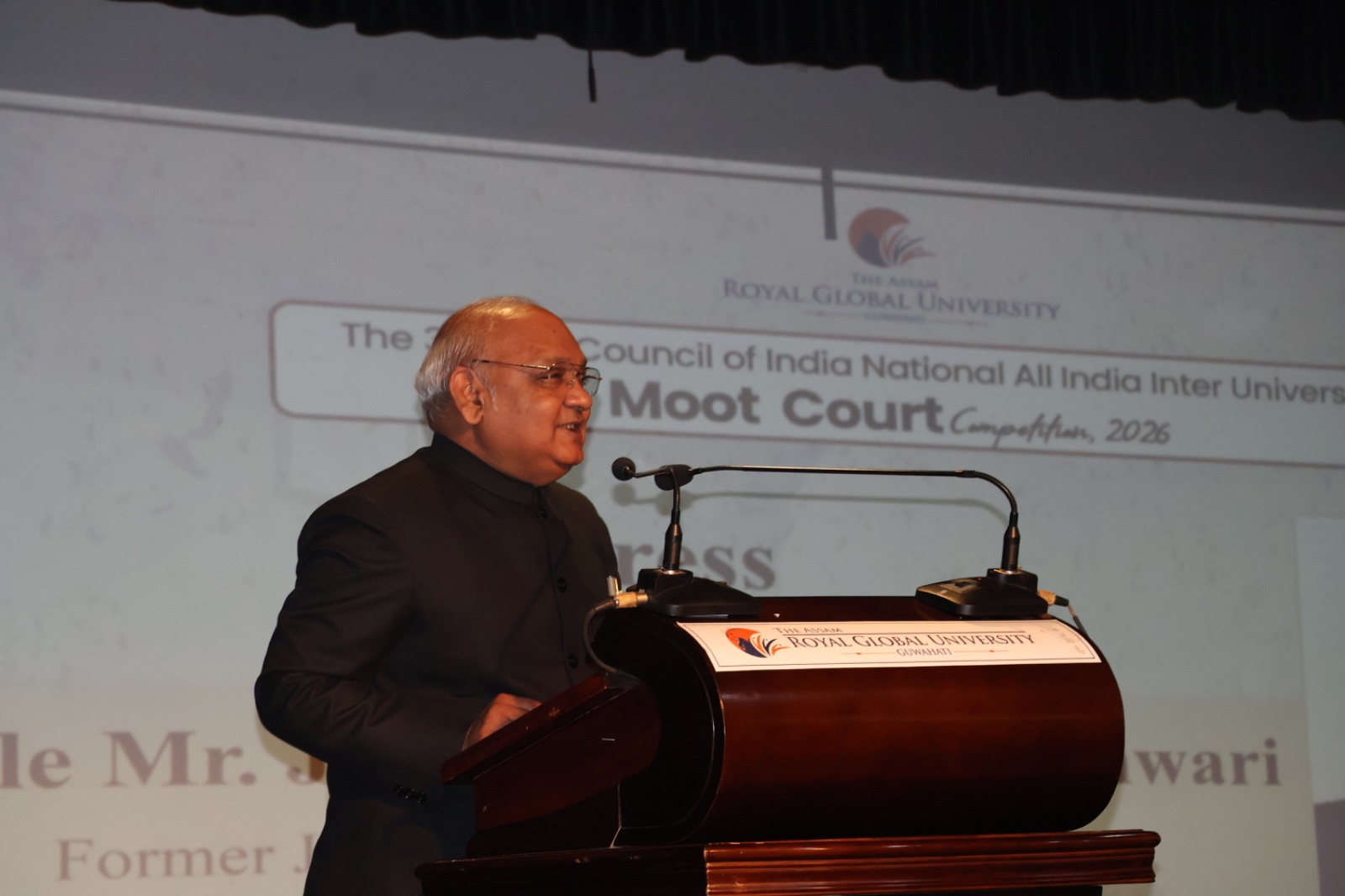
Addressing the gathering, Hon’ble Mr. Justice Dinesh Maheshwari acknowledged the meticulous organization of
the National Moot Court Competition and expressed his appreciation for the collaborative efforts of RGU and
the Bar Council of India. He warmly welcomed and congratulated the 64 participating teams from across the
country, noting the significance of such platforms in nurturing advocacy skills and legal scholarship among
law students.
In his address, Justice Maheshwari offered valuable insights on the use of Artificial Intelligence in
contemporary legal practice. While recognizing the growing presence of technology in the legal field, he
cautioned students against over-reliance on AI-generated content without proper verification. Reflecting on
his own legal journey, which began in 1982, he recalled how he and his contemporaries practiced law in an
era devoid of modern facilities such as the internet, mobile phones, laptops, or computers. He emphasized
that rigorous research, intellectual discipline, and personal diligence formed the foundation of legal
practice during that period.
To emphasize the importance of careful legal research, Justice Maheshwari shared a personal anecdote from
his days as a practicing advocate at the High Court of Jodhpur. He recounted an incident involving a
colleague who had filed an intra-court appeal from a Single Bench to a Division Bench. When asked to cite
precedents, the advocate submitted a Single Bench judgment, only for the judges to discover that it was the
very same case under appeal. The incident, arising out of sheer negligence, resulted in strong judicial
reproach and served as a lasting lesson on professional responsibility.
Drawing lessons for the present generation, Justice Maheshwari stressed that while knowledge and professional skills are indispensable, they must be complemented by zeal, ethical motivation, and a genuine commitment to societal good. He remarked that it is the harmonious combination of competence, integrity, and purpose that enables an individual to achieve success—not only in the field of law, but in any chosen profession.