
EHNF 2025: Global sustainability leaders, corporates and youth converge at Royal Global University
GUWAHATI, December 10, 2025: Diplomats, entrepreneurs, researchers, students,
investors and policymakers from India and abroad gathered at The Assam Royal Global University (RGU) today
for the opening of the 13th Eastern Himalayan Naturenomics™ Forum (EHNF) 2025, with a collective call to
place the Eastern Himalaya at the centre of global climate action. Envisioned by Shri Ranjit Barthakur, the
visionary behind the concepts of Third Pole and Eastern Himalaya Naturenomics and organised by Balipara
Foundation jointly with Royal Global University, IIT Guwahati, Gauhati University, and Cotton University;
EHNF 2025 focuses on aligning economic development with ecological regeneration in one of the world’s most
vulnerable mountain systems.
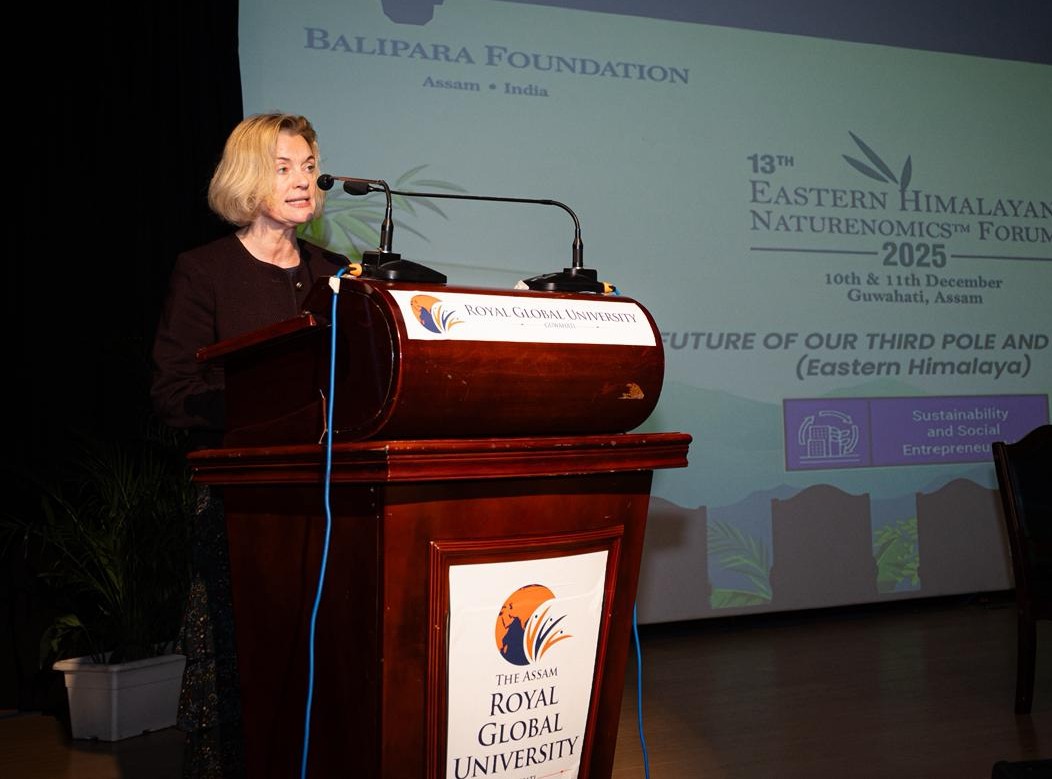
Delivering Leadership Speech, Norway’s Ambassador to India, Her Excellency May-Elin Stener, stressed that
climate diplomacy must prioritise mountain regions, describing them as “water towers for half of humanity.”
“Our mountain regions must move from the margins to the centre of climate action — because if the Himalaya’s
water towers weaken, half of humanity’s future weakens with it,” she said, highlighting the significance of
India–Nordic cooperation in clean energy and adaptation solutions.
Commenting on this occasion, RGU Chancellor Dr. A. K. Pansari said universities must become the ground from
where climate leadership emerges. “A university must not only enlighten minds — it must empower society. Our
students are not merely preparing for the future; they are creating it,” he said.
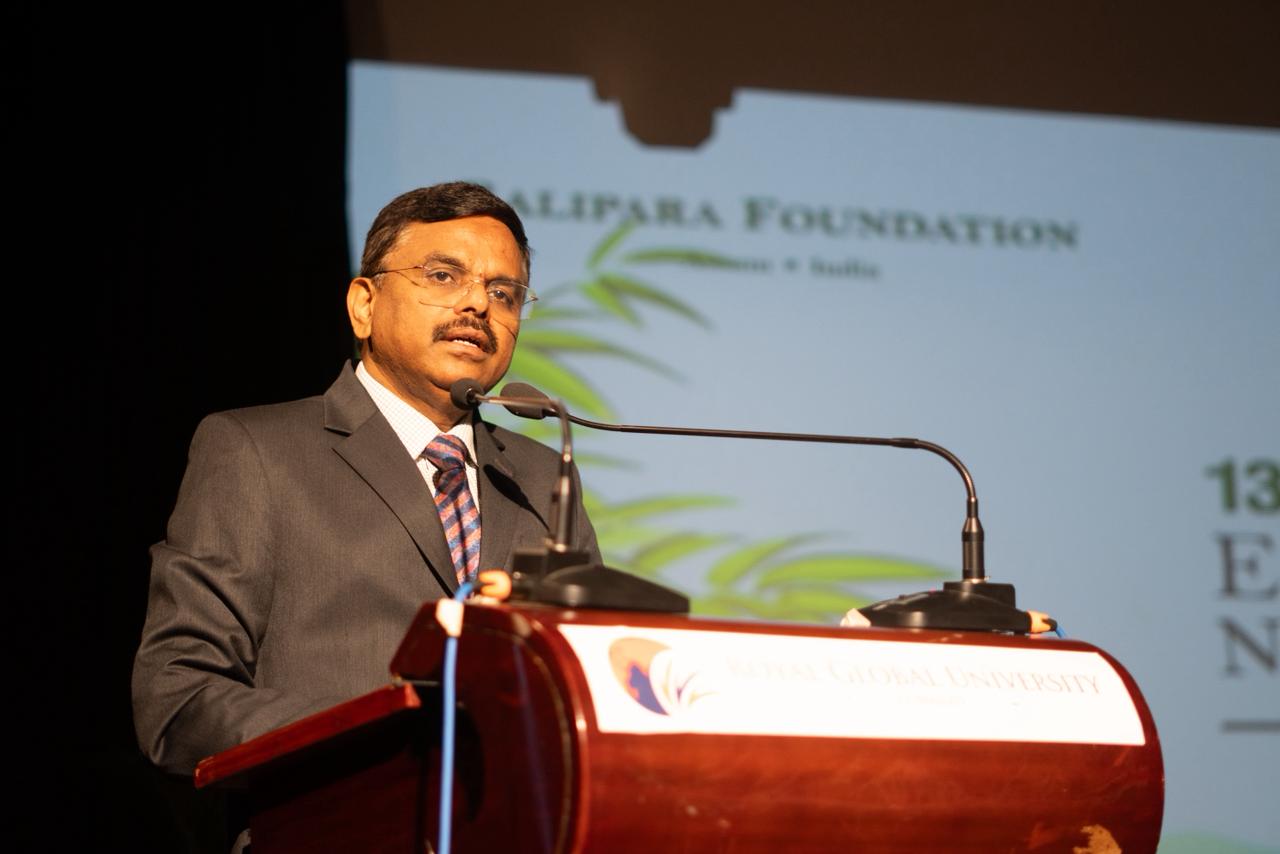
Calling for a reset in business priorities, Shri D. B. Sundara Ramam, Vice President – Corporate Services,
Tata
Steel India, said industry can no longer afford to treat ecology and economy as opposing forces.
Assam Chief Secretary Shri Ravi Kota underlined the State’s resolve to demonstrate a new development model
in
the Eastern Himalaya. “Assam has the responsibility and the opportunity to show that infrastructure,
industry
and forest protection can advance together,” he said, citing policy reforms focused on climate resilience
and
sustainable rural livelihoods.
Speaking from a frontline ecological perspective, Dr. Sonali Ghosh, Director, Kaziranga National Park, said
conservation must be seen as an economic pillar, not an obstacle.
A major highlight of the inaugural was the launch of the Guardians of Eastern Himalaya — a youth volunteer
network jointly promoted by Royal Global University, Balipara Foundation and Assam Investment Advisory
Society to mobilise students in river protection, forest restoration, biodiversity documentation and
community-based entrepreneurship, placing young people at the heart of climate solutions in the region.
Sessions through the day explored nature-based solutions, climate-linked entrepreneurship and corporate
leadership in regeneration, with speakers from Google, Coca-Cola, Tata Consumer Products, Tata Power, Tata
Electronics, Varun Beverages, Rajasthan Royals, NRL and civil society organisations from across the region.
The Forum also announced that research papers accepted will be published in special editions of the Royal
Journal of Social Science and Research (RJSSR), contributing to indigenous, evidence-based knowledge on the
ecology and economy of the Eastern Himalaya.
The Forum will continue tomorrow with discussions on cultural knowledge shaping sustainable business and
strategies to scale local innovations for global relevance, featuring participation from Bhutan, Nepal and
leading conservation organisations.